From Sperm to Baby: How to Keep Sperm Happy & Healthy
Sperm is the smallest cell in the human body, but it's made by the millions every day, and takes about 11 weeks to fully mature. Once inside fertile cervical mucus, sperm can survive up to 5 days waiting for ovulation.
In this post, we'll talk about the long journey sperm has to make, and let me tell you, it's quite the trip!
They say size isn't everything and sperm sure proves it! The egg is actually the largest cell in all of the human body, but sperm? It is the smallest. The egg is about 30 times the size of a sperm cell!

What they lack in size, they definitely make up in numbers. They've got us (women) beat there!
But between men (and even from one day to the next!) the number of sperm cells fluctuates enormously. For example, one study found that men produced a lot more sperm, and that sperm is of a lot better quality in winter time compared to the summer. And that has something to do with temperature!
Testicles and Temperature
Because instead of storing the important parts inside their bodies like women do with eggs in their ovaries, men store their precious goods outside their bodies; in the testicles. The scrotum works very much like a climate controlled space. It moves the testes closer to the body to heat them up, and relaxes and expands to move the testicles away from the heat source (the body) when it gets too hot.
In other words, the testes move closer to the body when it's cold and further away when it's hot. It's a very efficient system if you think about it.
The tiny sperm cells really need this temperature regulation to happen because if the testes get too hot, it literally interferes with sperm development.
HOT TIP, or maybe... COLD TIP: If you're trying for a baby, it's really important to stay away from hot tubs, saunas and other extreme heat sources.
Low Sperm Quality? You Might Be Able to Fix It!
Remember how women start with about 1 million eggs at birth? Well that's nothing compared to the millions of sperm that men produce each and every day. We're talking about 200 to 300 million! While women are born with all the eggs they'll ever have, men keep making new sperm. There's a really neat advantage to this. A single sperm cell can go from being produced to being mature enough to fertilize an egg in about 11 weeks. That's only 2.5 to 3 months.
So if you're worried about sperm quality due to certain lifestyle factors such as smoking, or that hot tub that I just mentioned, keep in mind that you can turn a lot of things around in just 11 weeks by changing a few things.
The Journey: From Sperm to (Almost) Baby
Sperm are transported in their own vessel, a bit like the follicle that nourishes the egg. Semen is that vessel for sperm. And semen provides all the nourishment and protection the little swimmers need. Thanks to semen, sperm won't dry out and it also offers protection from the acidity of the vagina.
Of the millions of sperm that enter the vagina, the majority don't even make it through the cervical canal.
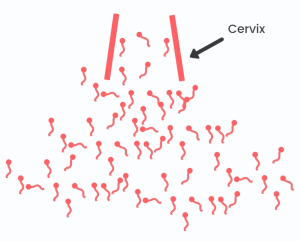
But that's not necessarily a bad thing, as it works as a natural selection for sperm, allowing only the strongest and healthiest sperm to make it up there.
Once they reach the cervix though, things start to get a little easier. The cervix is covered in a pH-friendly mucus, called cervical mucus. During your fertile days, this stuff is the perfect transport fluid for sperm. It works just like semen and contains nutrients to help sperm thrive, and lots of water to make it easier to get where it's going.
In other words, cervical mucus is GREAT for sperm — it's a big part of why tracking your cervical mucus can help you time things right.
So only the strongest sperm get to "swim" across the uterus and travel up the fallopian tubes. And once they're there, after that long trek, they attach themselves to the walls of the fallopian tubes where they survive for 2 to 3 days. In your fertile window, thanks to the changes in cervical mucus, some sperm manage to survive for 5 whole days!
This means that sex on a Monday could lead to you getting pregnant on Friday, right after an egg is released! But 2-3 days is more realistic, which is why pinpointing your fertile window and timing sex is so very important.

As soon as the egg is ovulated, sperm gets ready to fertilize. The sperm knows where to find it because the egg releases a chemical signal that attracts sperm. And then, once a single sperm cell successfully enters the egg, the egg protects itself with a shell so that no other sperm can enter (as you might have guessed, this mechanism sometimes fails, resulting in identical twins!).
And just like that, fertilization has occurred. We just need it to grow for a few more days and for the fertilized egg to implant in your uterus before you're officially pregnant.
Remember This
So while sperm cells are absolutely TINY, there are so many of them that one often finds its way to the right spot. Their journey to the fallopian tubes isn't easy, but once they're there, they can survive for a few days waiting for the egg to be released.
So there you have it—hopefully you have some newfound appreciation for those little swimmers who are on quite a journey of their own!
Common questions
How long can sperm survive inside the body?
In fertile cervical mucus, up to about 5 days. Outside of your fertile window, survival time drops sharply, often to a day or less.
Can lifestyle changes actually improve sperm quality?
Yes -- since sperm takes about 11 weeks to fully mature, changes like quitting smoking or avoiding hot tubs can show up in sperm quality within about 2.5 to 3 months.
Why do testicles hang outside the body?
Sperm production is temperature-sensitive, and the scrotum acts like a climate control system, moving the testes closer to or further from the body to regulate temperature.