This Is What a Positive OPK Looks Like
A positive OPK means the test line is as dark as, or darker than, the control line -- the exact LH numbers behind it don't matter, since baselines vary a lot from person to person.
OPKs can be confusing — but they don't have to be.
What a positive actually looks like
OPKs measure LH, a hormone that's always present in your body at some level, which is why you'll always see some kind of line, regardless of when you test. Right before ovulation, LH surges — the final signal that tells the egg to finish maturing and get ready for release. Your actual LH numbers might go from 2 to 20 mIU/mL, or from 7 to 100 mIU/mL — it varies a lot person to person. The exact numbers don't matter nearly as much as the fact that there's a clear, sudden increase.
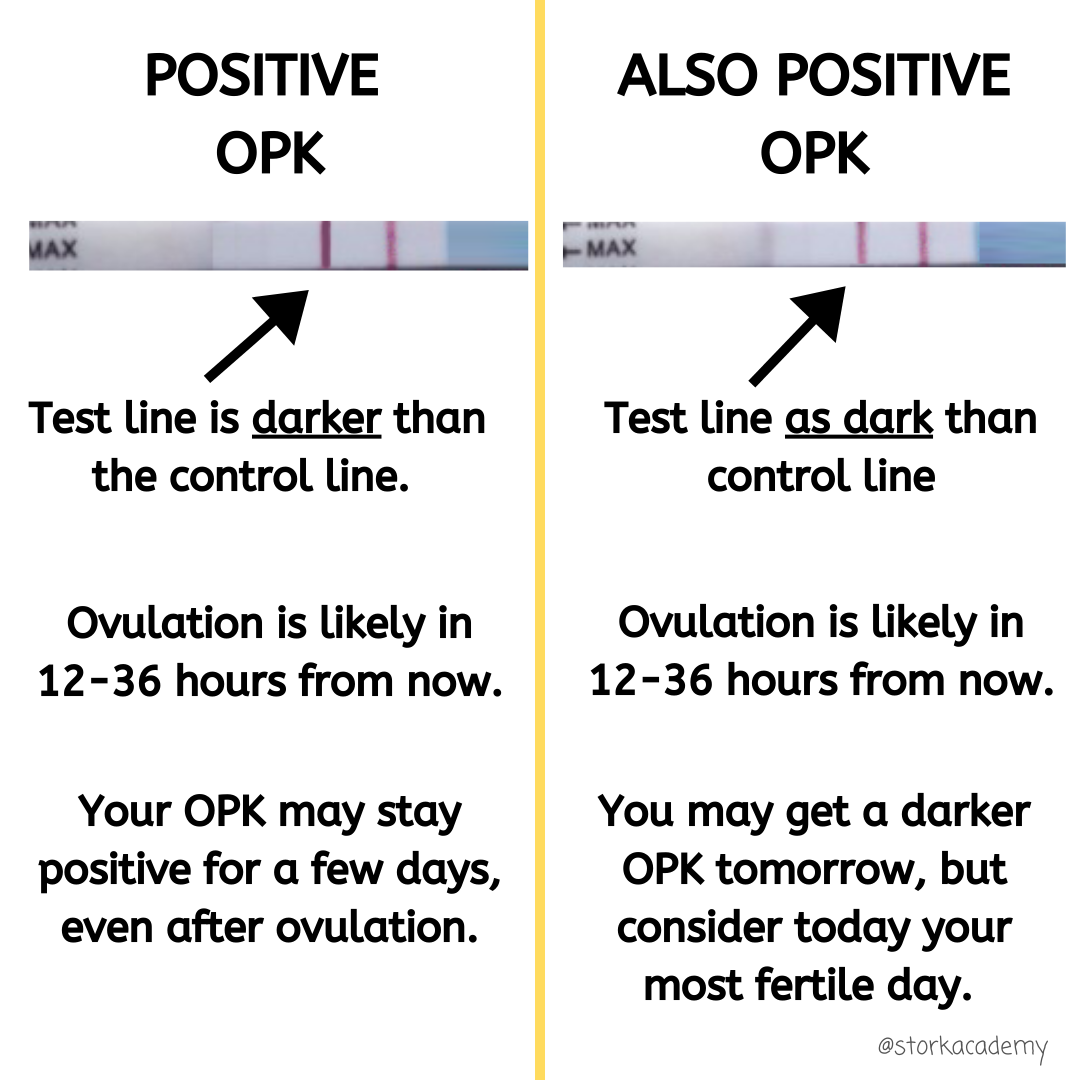
Some women's positive OPKs won't look exactly like a textbook example, and that's fine too. As long as the test line is as dark as the control line, consider yourself in your fertile window. You can keep testing to see if the line gets darker still, but don't wait around to have sex — for some people, the surge takes a while to come back down, and the darkest line of the bunch can actually show up after ovulation has already happened. If you wait for that peak, you may have already missed your fertile window, since the egg isn't viable for long once it's released.
What to do once you get a positive
- Have sex that day, and the next two days — these are your most fertile days.
- Watch your cervical mucus. Soon after ovulation, it typically shifts from wet, stretchy, and slippery to dry or creamy, which is a sign your fertile window has closed.
- If you're tracking basal body temperature, expect a rise after ovulation — sometimes the day after, sometimes over a few days.
Common ways people misread their OPK
A few patterns trip people up more than any others:
- Comparing to yesterday's test instead of the control line. A line that's "darker than yesterday" but still lighter than control isn't a positive yet.
- Testing at the wrong time of day. LH surges are typically detected more reliably in the afternoon, since morning urine can dilute a fresh overnight surge. If you're getting inconsistent results, try testing once around midday and again in the early evening.
- Overhydrating right before testing. Diluted urine can mute a real surge into what looks like a negative. Try to avoid chugging fluids in the hours before you test.
- Stopping too early. If your cycles run on the longer side, don't assume you've missed ovulation just because you haven't seen a positive by "day 14" — keep testing.
If your OPKs are giving you strong lines that never seem to fully clear, it's worth reading up on how PCOS can affect OPK results, since a persistently high baseline can make interpretation trickier.
Common questions
Do I need my test line to be darker than the control line?
No -- as dark as the control line already counts as positive. A test line darker than control is a bonus, not a requirement.
What's the most common OPK mistake?
Waiting for the darkest possible line before having sex. By the time your surge is at its peak or already declining, you may have already missed the most fertile part of your window.
Can I get a false positive on an OPK?
Yes -- conditions like PCOS can cause a higher baseline LH that looks like a surge even when ovulation isn't imminent, and certain fertility medications can also cause a temporary LH rise.