Blue vs. pink dye pregnancy tests
Both blue and pink dye tests detect the same hormone, hCG -- the real difference is line visibility. Pink dye produces a darker, more definitive line, while blue dye lines can be fainter and easier to confuse with an evaporation line.
We all know that even a faint line still means you're pregnant. But what if that faint line shows up on a blue dye test -- is it any different?
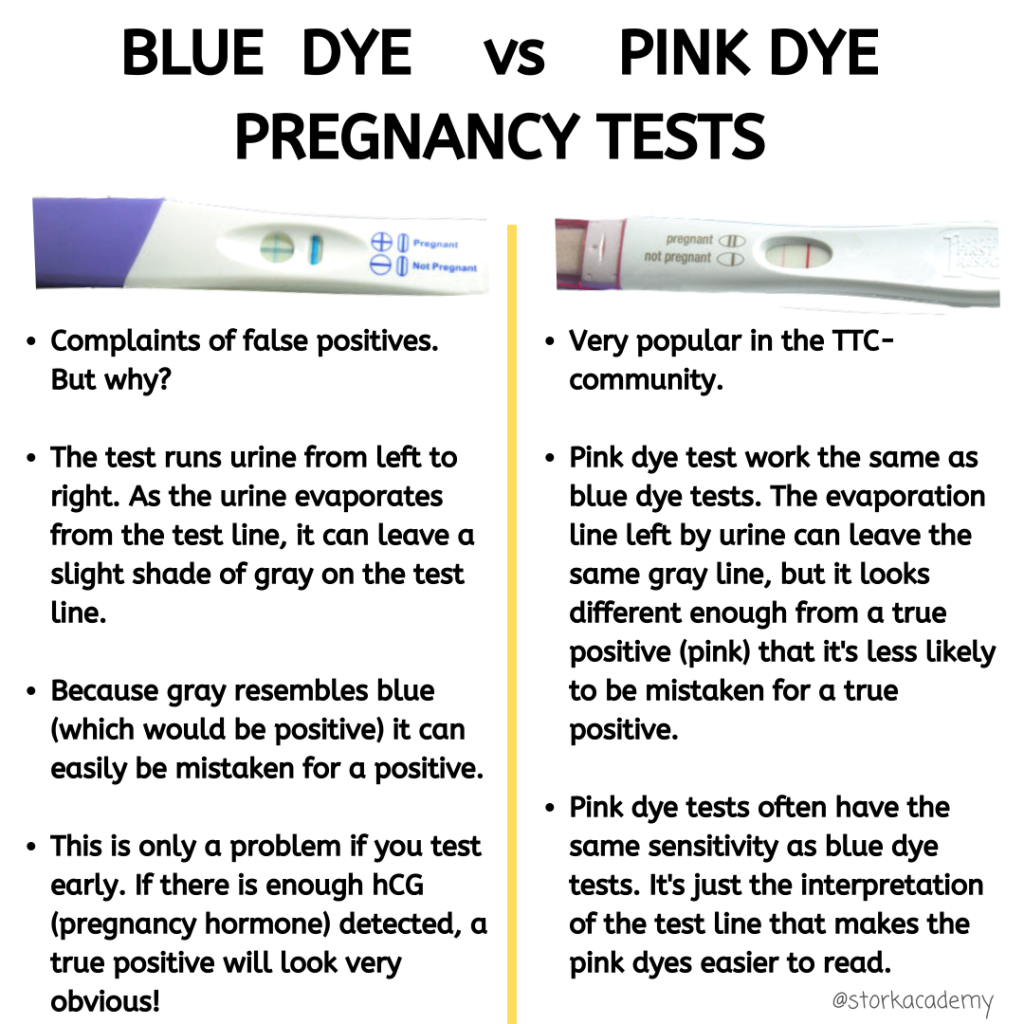
Pregnancy tests, no matter the color, work by detecting hCG (the pregnancy hormone) in your urine. As urine moves across the test, hCG binds to the antibodies on the test line and a chemical reaction causes a color change -- blue for blue dye tests, pink for pink dye tests. There is always a control line, which shows up regardless of pregnancy just to confirm the test is working. If you don't see any lines at all, the test isn't working. As urine moves through the test it may also leave a thin grayish line -- the "evap line," caused by evaporation. It doesn't always happen, but it can.
The infamous evap line
You can get evap lines on any line-test. The problem with blue dye tests specifically is that the blue line of a true positive can resemble a gray-ish evap line that shows up even when you're not pregnant -- which can leave you doubting the result. If you wait long enough for hCG to build up, there's no ambiguity regardless of test color. hCG starts building as soon as the embryo implants (often 8-10 days after ovulation) and roughly doubles every 48 hours. It's those earliest days, when hCG is still low, that give blue dye tests their bad reputation. By 14 days after ovulation (not necessarily the same as your missed period), levels should be high enough for an obvious line on any test.
Pink vs. blue: what's the actual difference?
The key difference comes down to the visibility and intensity of the positive line. Pink dye antibodies produce a darker, more vivid line; blue dye antibodies yield a lighter, more subdued one. That makes faint early positives harder to interpret on blue tests, and evap lines more prone to mimicking a true positive. Neither color is inherently more accurate or sensitive -- both detect the same hCG. It's purely a matter of line intensity.
Why choose pink dye tests?
- Easier to interpret: a darker positive line is more definitive than blue dye's fainter lines.
- Earlier detection potential: some pink dye tests are known for picking up lower hCG levels, sometimes 1-2 days sooner.
- Reduced ambiguity: clearer positive/negative results, versus blue dye's tendency toward questionable faint lines.
- More vivid lines overall compared to paler blue dye lines.
Bottom line: if you're questioning faint lines or want the earliest detection possible, pink dye is likely your best bet.
The best pregnancy tests
Blue or pink, any test can give accurate results -- but many impatient testers have more confidence in an obvious pink line than a questionable faint blue one. First Response Early Result (FRER) is the well-known leader in early pink dye detection, claiming results up to 6 days before a missed period (your own timeline depends on luteal phase length). For maximum sensitivity, look for a test rated 25 mIU, which picks up lower hCG levels.
While FRER is the gold standard, cheaper pink dye tests can be equally sensitive. False negatives are common in the early days; false positives are very rare, so any pink line likely means pregnancy, however faint. Check out my favorites to find the right test for your needs and budget.
Common questions
What causes an evap line?
A faint grayish line caused by urine evaporating on the test strip after the results window has passed. It can appear on any brand and doesn't indicate pregnancy.
Are pink dye tests more accurate than blue dye?
Not more accurate overall -- both detect the same hCG hormone. Pink dye just produces a bolder, easier-to-read line, which matters most in the earliest, lowest-hCG days.
When can I trust a clear result either way?
By about 14 days after ovulation, hCG levels are typically high enough that any test, blue or pink, should give an unambiguous result.